1. Name the wall
Write down the exact point where progress changes: a stage, a boss, a resource shortage, or a team member that fails first. A named wall is easier to solve than a vague feeling that the build is weak.
Tiny idle RPG guide
Give your tiny heroes one clear job at a time. Use the stage that stops you to decide what to improve next, instead of changing every item, skill, and rune at once.
Start with the problem
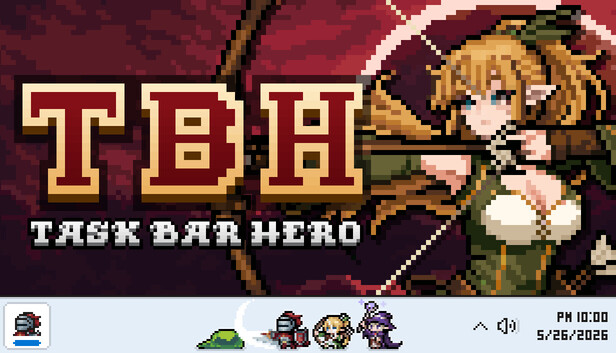
Steam describes TBH: Task Bar Hero as a tiny idle RPG with pixel heroes, classes, skills, items, and builds running from the taskbar. That amount of choice is useful only when you connect it to a clear problem. If a stage is slow, decide whether the issue is survival, damage, timing, resource access, or team role. Then change one part of the build and observe the result.
Write down the exact point where progress changes: a stage, a boss, a resource shortage, or a team member that fails first. A named wall is easier to solve than a vague feeling that the build is weak.
Read current in-game descriptions for the gear, skill, rune, and material systems you are about to change. Patch balance, scaling, and unlock requirements can make old build advice incomplete.
Swap one item, adjust one skill choice, or invest in one targeted upgrade. Making five changes at once hides which decision actually helped and makes the next step harder to repeat.
Use the same stage or enemy type when possible. Look for a real difference in clear consistency, survival, or resource flow before moving more scarce materials into the plan.
Build decisions
A useful Task Bar Hero build is not a list of names with no context. It says what a hero or party is meant to do, which stage condition it addresses, what it needs to function, and which game version it was tested against. Community databases can help you find possibilities, but the current in-game state decides whether a build still fits your save.
Choose the job before the gear: sustained damage, burst, survival, control, support, or resource efficiency. A piece of gear has more value when you can explain which missing job it fills.
Give each choice a purposeDo not judge a skill only by its first number. Look for how it changes the timing, damage type, range, recovery, or defense of the rest of the build in the current version.
Check the whole loopRunes and passive effects are best used after the basic role works. They can sharpen a real strength, but they rarely rescue a party that lacks the survival or damage type a stage demands.
Refine the working planA build without a game version or update date is an idea, not a permanent answer. Keep the date and the context beside any recommendation you save.
Keep advice freshWiki map
The supplied Task Bar Hero community Wiki organizes its database around gear, grades, materials, material effects, stages, stage boxes, monsters, skills, passives, runes, buffs, status effects, heroes, pets, Cube features, market data, builds, and tools. Use that structure as a way to locate a question. It is better than searching a broad term and applying the first outdated answer you find.
Use these pages when you need to understand an item's current role, its upgrade path, or the material cost of a decision. Compare the requirement to the wall you are facing before spending.
Use stage and monster references to identify what the current obstacle asks of a party. A drop target and a clear target are not always the same thing, so choose the one that supports your immediate plan.
Use these systems to define party roles and combat loops. Read the live description in your game before treating an older database entry as complete.
Community documentation groups synthesis, alchemy, crafting, decoration, engraving, inscription, extraction, and offering under Cube. Treat these as long-term systems: learn the cost and recovery rules before consuming a rare input.
Progression habits
Idle games reward regular, deliberate adjustments more than panic spending. Build tools, market data, drop lists, farming planners, damage calculators, and save inspectors can be useful, but they are only as good as their version and their handling of your data. Use tools to frame a decision, then confirm the result in the game you are actually playing.
Set a resource goal that unlocks one upgrade or one test. Farming without a defined use can leave a full inventory and no clearer path through the next wall.
Make the target specificIf the current game offers market activity, verify item identity, version, and cost in the live interface. Treat old price lists as historical context, not a promise of value.
Confirm before tradingBack up locally where the game supports it. Do not upload a save file to an unfamiliar calculator, browser extension, or shared form until you understand what is sent and retained.
Protect your progressAfter a patch or a major build change, review your role, gear, skill choices, and stage target. A ten-minute check prevents days of following a build that no longer matches the version.
Recheck after updatesA clean decision path
When you hit a wall, use a short sequence: identify the stage or monster, identify the failing role, inspect the relevant gear and skill descriptions, choose one targeted change, then test it on the same problem. This is the smallest useful loop for both a new player and a late-game player. It keeps the wiki focused on evidence instead of rankings without a scenario.
Check whether the party is losing time to survival, targets, or skill timing before assuming the answer is the highest visible damage stat.
Diagnose firstLook for the source of failure: burst damage, a repeated effect, lack of control, or a role gap. The remedy should fit the cause.
Fix the failure modeChoose the stage or activity that supports the next material, item, or upgrade decision. Re-evaluate once that goal is reached.
Farm with intentEditorial source policy
Checked July 18, 2026: Steam identifies TBH: Task Bar Hero as a taskbar-based tiny idle RPG with pixel heroes, classes, skills, items, and builds. The supplied Task Bar Hero Wiki was used to map player questions and current database categories such as gear, stages, heroes, skills, runes, Cube systems, and tools. This independent page does not copy its data, publish stale values as fact, or claim official affiliation.
Steam describes it as a tiny idle RPG that runs from the taskbar, with pixel heroes, diverse classes, skills, items, and builds.
Start with the exact stage or monster that blocks progress. Identify the missing role, check current gear and skill descriptions, change one decision, and test on the same problem.
Community documentation groups several long-term systems under Cube, including synthesis, alchemy, crafting, decoration, engraving, inscription, extraction, and offering. Check the current game for each system's exact rules and costs.
Use only a tool you trust and understand. Keep a local backup where possible, and do not upload a save file before checking what data the tool sends or stores.
No. Peanutize Me is an independent guide site. Use Steam and current developer or in-game information for official support and update facts.
More game guides
Browse the central directory for independent game guide hubs.
Open directoryAlbum search, co-op painting, lobby plots, auto-save, and live-source checks.
ExploreCodes, beginner progression, worlds, fighters, dungeons, raids, and update checks.
Explore