Read the current objective
Start every shift by checking the active task and the available work areas. A clear objective tells you which tool, room, or patient queue matters first.
Know the jobRoblox co-op horror guide
The night shift is not just about treating patients. You need to notice what does not belong, protect the run, and keep your team from solving the same problem twice. This guide gives you a clear process before the hospital gets harder to read.
Game overview
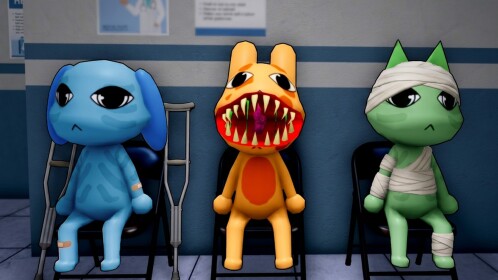
Animal Hospital is a Roblox experience by Animal Anomaly. Its official description puts players on the night shift, treating patients while some patients act strangely. That simple setup creates the main loop: receive a patient, collect enough information to judge the case, treat a normal patient, and avoid letting a dangerous mistake spread through the hospital.
The strongest beginner habit is not speed. It is consistency. Use the same small sequence for each arrival. A stable process lowers panic, makes anomalies easier to notice, and gives a co-op team a shared language when the hospital becomes busy.
Start every shift by checking the active task and the available work areas. A clear objective tells you which tool, room, or patient queue matters first.
Know the jobYou cannot reliably spot an anomaly until you know what ordinary patient information, behavior, and workflow look like in the current build.
Notice the differenceDo not admit or reject a patient from one clue alone. Compare multiple signals, then make the decision that the live interface supports.
Verify before actingKeep a route back to a safe work area, watch the team state, and handle urgent problems before optional exploration or spending.
Stability firstAnomaly detection
Reference material for Animal Hospital repeatedly points players toward visual signs, photos, cameras, paperwork, and audio as possible sources of evidence. Exact anomaly types and tools can change, but the decision method stays useful: establish the expected baseline, look for a mismatch, confirm it with another source when possible, then use the appropriate in-game action.
Look for anything that conflicts with the normal presentation you have learned. Avoid scanning too fast. A short, steady observation pass is more useful than trying to memorize every possible horror cue.
Compare what the patient shows with the appointment, paperwork, photo, camera view, or other record supplied by the game. A mismatch matters most when it can be checked twice.
In co-op, say what you saw and where you saw it. “Photo differs from patient” is more useful than “I think it is bad.” Clear callouts stop the team from repeating the same check.
Follow the current game's admit, reject, shutter, treatment, or safety prompt. Do not use a remembered response from an old video when the interface tells you otherwise.
Treatment workflow
A good Animal Hospital run balances care work with risk detection. Treating every patient slowly can create a queue. Rushing every patient can let a bad case through. Use the current shift's urgency and the evidence you have, rather than assuming one speed fits every case.
Run the patient check before you commit tools or time. This makes treatment a deliberate choice rather than a reaction to the first visual cue.
Check firstUse the treatment sequence shown in the live interface. Medical item names, timing, and failure rules are update-sensitive, so the current prompt is more reliable than a static list.
Use current instructionsReturn tools, clear your immediate area, and tell the team whether the case is finished. A short reset prevents a completed patient from turning into a source of confusion.
Close the loopShop items, upgrades, and classes should solve a problem you have already met: information gaps, recovery, mobility, or a specific late-shift risk. Do not buy from a tier label alone.
Buy for the wallSurvival and progression
Reference guides describe Animal Hospital as escalating through shifts, with more information to manage and more pressure on a team. The exact shift thresholds, items, enemies, and classes can change. The dependable strategy is to increase role clarity before the game forces it on you.
Some guide sources describe Sanity as a survival resource affected by scares, mistakes, and hostile encounters. Watch the live meter and recovery options. Prioritize staying functional over taking a risky optional action.
One player can own the patient flow: receive arrivals, state the check result, and keep the treatment queue clear. This is especially helpful when the hospital gets noisy.
Another player can verify cameras, records, and unusual activity. This role should report evidence, not make every decision alone, so the desk player can keep moving.
When the current build offers safety tools or emergency tasks, assign a player to them. A response player should stay reachable rather than disappearing into unrelated exploration.
Solo players need a slower version of the same plan: check one source at a time, leave enough room to retreat, and avoid taking on several unknown tasks at once.
After a loss or close call, name the first decision that broke down. Was it a missed check, bad communication, low recovery, or an ignored objective? Change one habit next shift.
Hospital layout
The map is not just scenery. It determines how long it takes to check a patient, reach information, respond to danger, and return to the team. Rather than memorizing a route from an old map image, walk the current hospital at the start of a session and identify the places that matter to your role.
Know where a patient arrives, where you inspect them, and where treatment or a final decision happens. This reduces hesitation when the queue grows.
Map the core loopFind the places used for available records, cameras, photos, or other verification. Tell teammates their location with simple route names they can repeat.
Share the routeWhen you enter an unfamiliar room or follow a new event, remember the quickest safe way back to the active work area. Do not trap the only response player in a side route.
Leave room to respondCodes, classes, and updates
Searches for Animal Hospital codes, tier lists, items, classes, enemies, and update notes are useful because players want a faster answer. They are also the most likely parts of a Wiki to become stale. During this research pass, an independent reference reported no current code redemption system, but that should be treated as a status to recheck in the live game, not a permanent promise.
Check the Roblox description and the developer's current announcements first. Never enter account details or install anything to claim a “code.”
Verify in the live gameCompare the current class description with the team role you need. A list may be useful for ideas, but patch changes and player count can change its value.
Read the current benefitAfter an update, revisit patient checks, item behavior, and shift strategy. Separate official patch information from community reports and label anything still uncertain.
Check the dateSource policy
The official Roblox listing confirms the game title, Animal Anomaly as the creator, and the night-shift treatment premise. The supplied independent Wiki helped map player questions around anomalies, shifts, and survival. The Fandom source could not be accessed because of its Cloudflare challenge, so it was not used for factual claims. This page is an independent guide, not an official Animal Hospital property.
Animal Hospital is a Roblox experience by Animal Anomaly. The official page says you work the night shift, treat patients, and face patients who are acting strangely.
Use a repeatable comparison process: learn the baseline, observe the patient, compare available records, communicate the evidence, and follow the current in-game response.
Do not assume a code list is active. Check the live game and official developer channels, because redemption systems and rewards can change.
Yes. Clear roles for patient flow, information checks, and emergency response can reduce missed details. Solo players can use the same process at a slower pace.
No. Peanutize Me is an independent guide site. Use the official Roblox page and Animal Anomaly channels for current information.
More game guides
Browse the central directory for independent game guide hubs.
Open directoryCodes, beginner progression, worlds, fighters, dungeons, raids, and update checks.
ExploreRelease status, launch preparation, units, traits, summons, raids, and code verification.
ExploreEdward Kenway, land gameplay, the Jackdaw, naval action, Caribbean exploration, and source checks.
Explore